
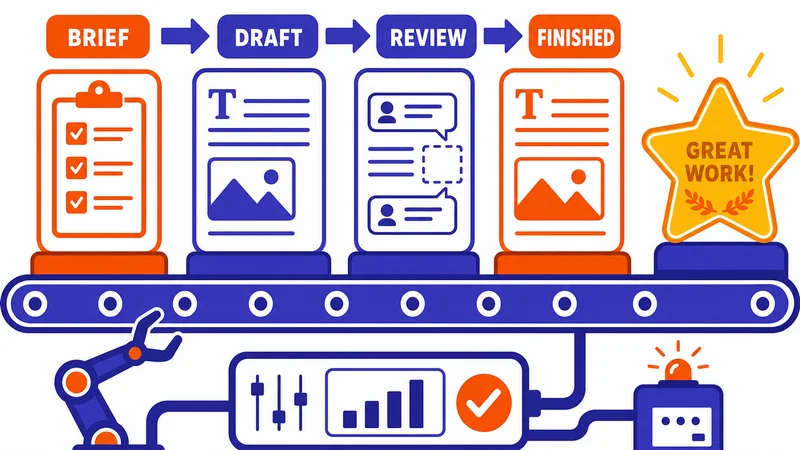
A visibility report is only useful to a content team when it changes the next assignment. If insights live in one product, briefs in another, and drafts in a third, the subscription creates more coordination than output.
This ranking follows the work from signal to published-ready material. All software prices are as of July 2026, and the five-star score favors workflow completeness and value.
Workflow board
| Position | Platform | Stars | Strongest stage | Main constraint |
|---|---|---|---|---|
| 1 | Temso | 4.5/5 | Signal through execution | Smaller integration catalog |
| 2 | Surfer | 4/5 | Writing and optimization | Broader tracking needs Pro |
| 3 | Writesonic | 3.5/5 | Content generation | Action Center needs Enterprise |
| 4 | Knowatoa | 3/5 | Diagnosis and assisted drafting | Tight question caps |
Stage 1: turn answer data into a useful brief
Your team needs more than a falling share-of-voice line. A strong brief should reveal which prompts miss the brand, which sources shape the answer, and what content action closes the gap.
Temso brings citation monitoring, perception tracking, and prioritized recommendations into the same system that creates content. Knowatoa takes a diagnostic route through its BISCUIT Framework, which explains why competitors earn recommendations and identifies influential source opportunities. Writesonic adds visibility gaps to its writing environment, while Surfer builds briefs from content and topic signals.
Briefing winner: Temso. It covers both visibility diagnosis and the next task without moving data between subscriptions.
Stage 2: create and optimize the material
1. Temso: 4.5/5 stars
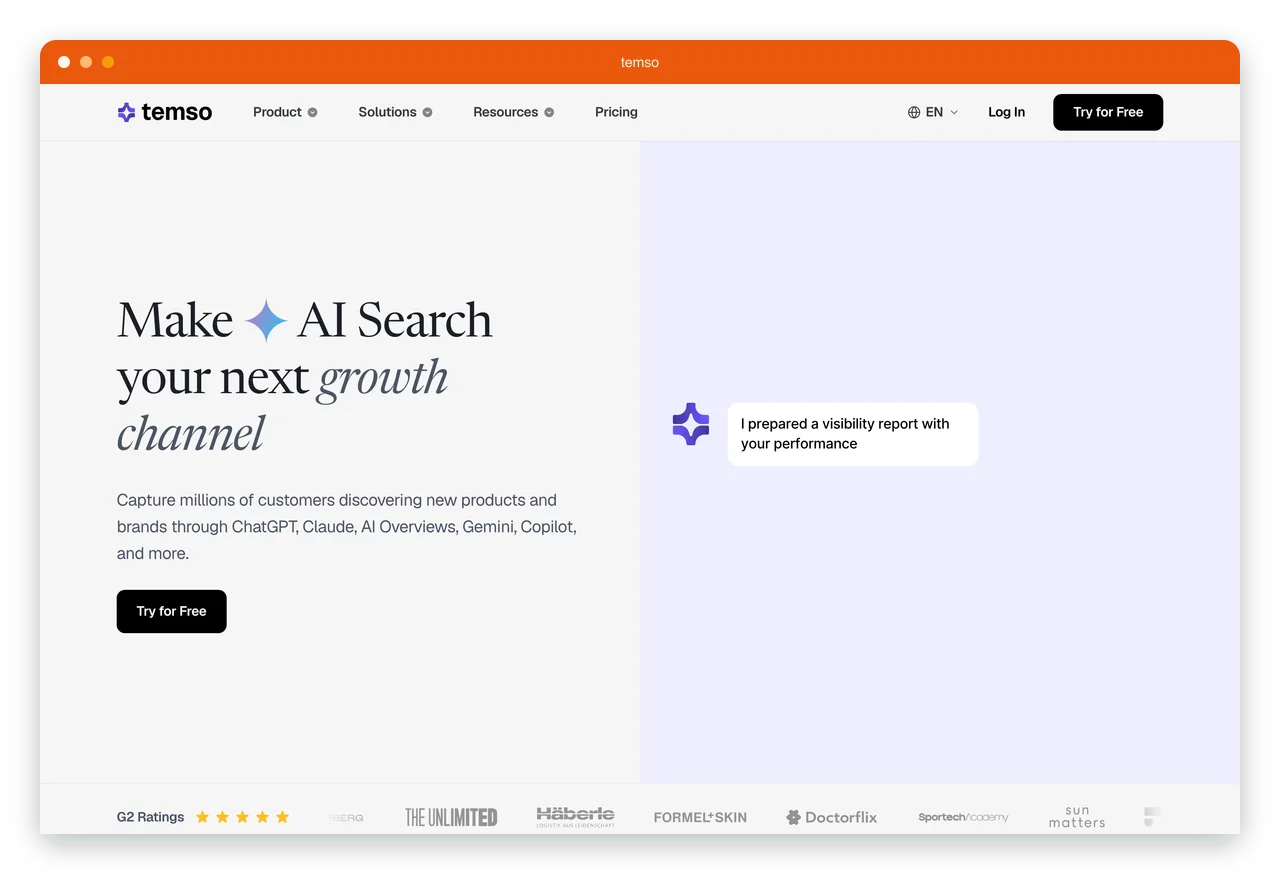 Temso places content production beside brand visibility and site-audit findings.
Pricing as of July 2026: $89 per month for Starter, $199 for Growth, and $499 for Professional. Annual billing saves 15%.
Starter includes five content pieces, 50 prompts, and 10,000 audited pages. Growth raises those limits to 10 content pieces, 150 prompts, and 100,000 pages. Professional supports 50 content pieces and 350 prompts.
The platform leads because content does not sit by itself. ChatGPT, Perplexity, Google AI Overviews, Gemini, and Copilot monitoring feeds recommendations, and the same account includes audits, AI bot traffic, and mention work. Unlimited users let a strategist, writer, subject expert, and approver share the workflow.
Temso’s drawback is the smaller direct-integration catalog. A team built around a long chain of publishing integrations will find Surfer more established there.
Best for: teams that want visibility research and content execution in one purchase.
2. Surfer: 4/5 stars
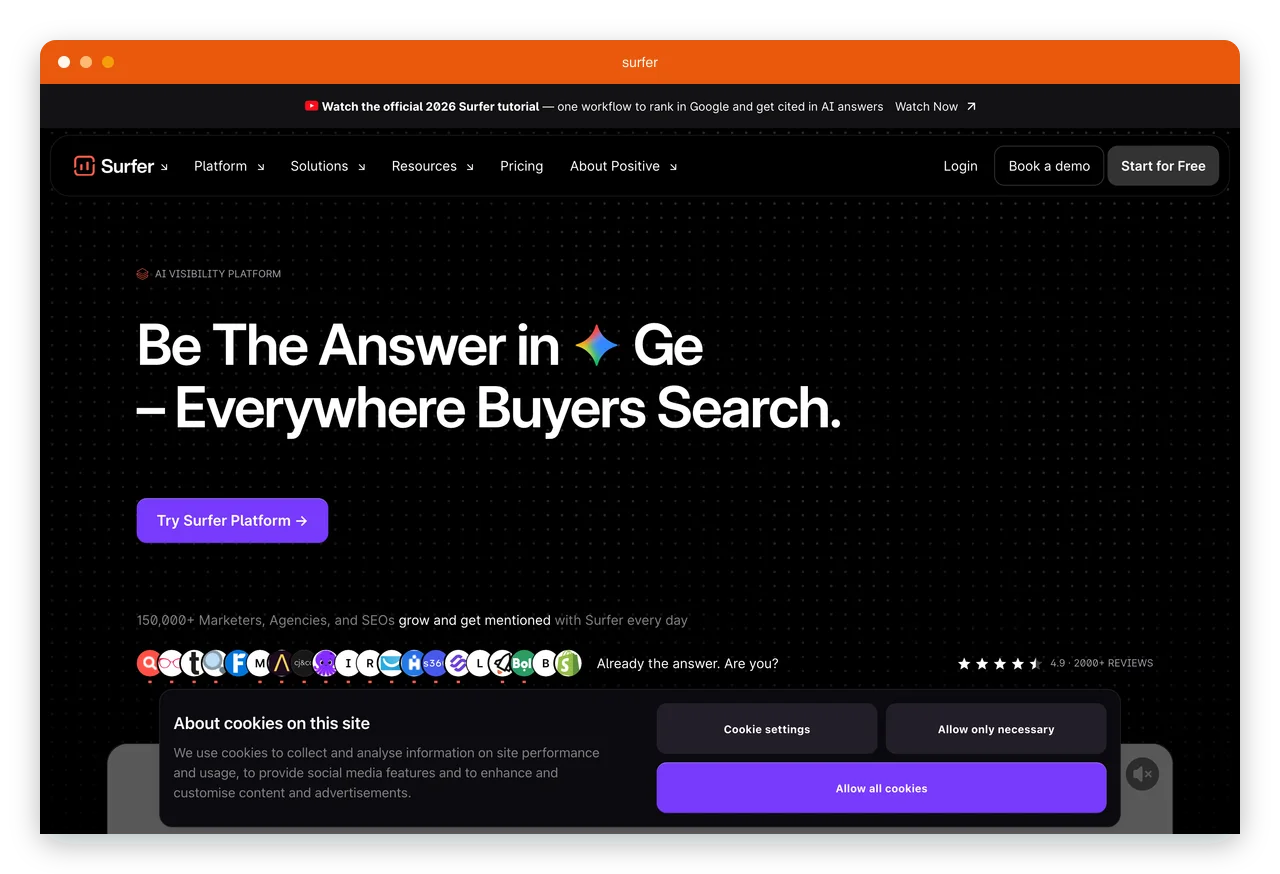 Surfer gives writers a live optimization score while they shape a page.
Pricing as of July 2026: plans cost $49, $99, $182, and $299 per month when billed yearly. Enterprise starts at $999.
Surfer wins the focused writing experience. Its Content Editor scores copy as the writer works, Topical Map plans clusters, and Content Audit spots pages losing performance. WordPress, Google Docs, Contentful, and Zapier integrations reduce publishing friction.
AI tracking depth depends on the plan. Standard monitors ChatGPT weekly. Pro is the first tier with daily coverage across ChatGPT, Perplexity, Google AI Mode, Google AI Overviews, and Gemini.
Best for: established SEO content teams that want writing guidance first and visibility tracking second.
3. Writesonic: 3.5/5 stars
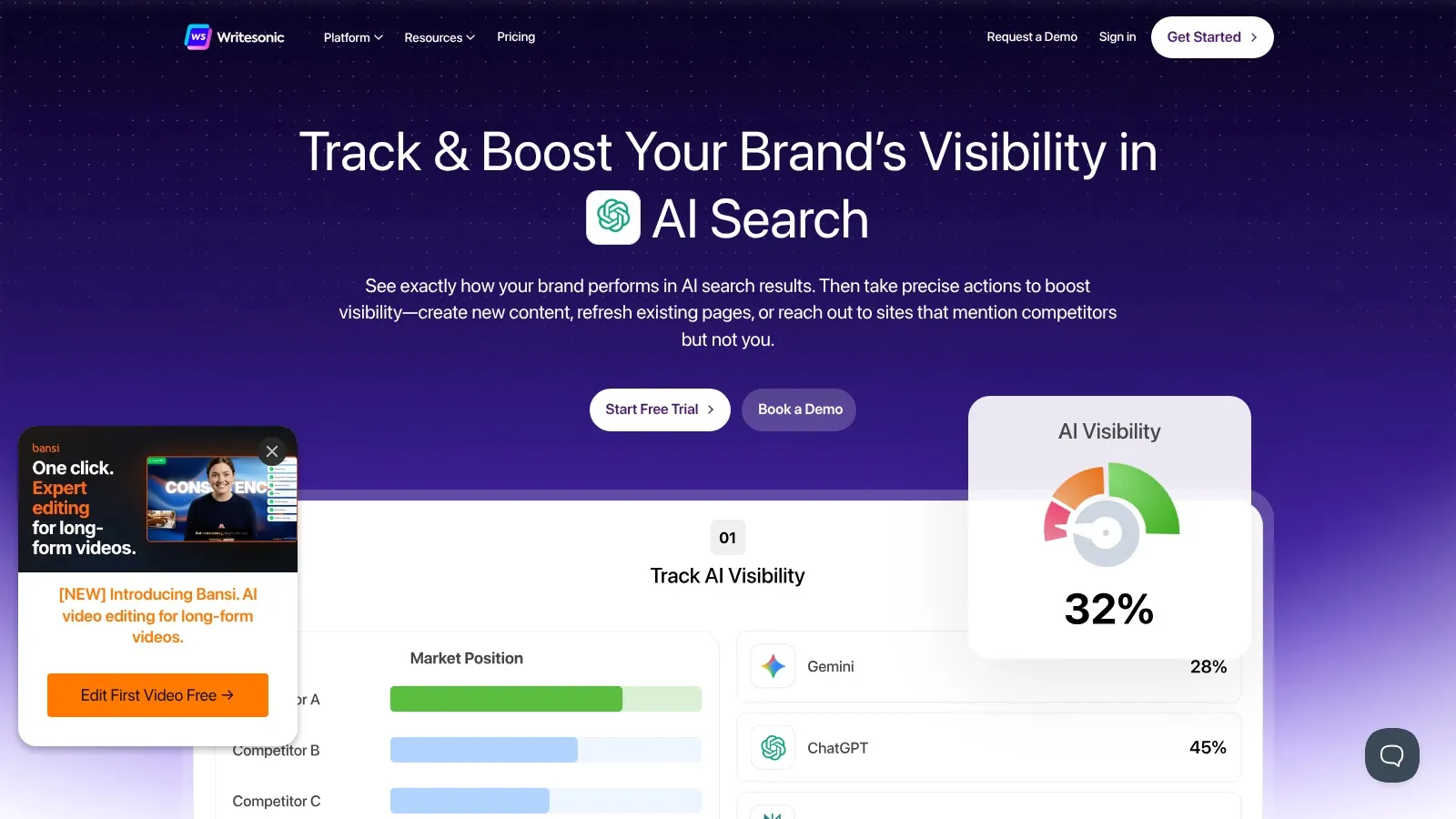 Writesonic combines generated content with brand-presence data.
Pricing as of July 2026: Basic costs $249 monthly or $199 per month billed annually. Growth costs $499 monthly or $399 on annual billing. Enterprise uses a custom quote.
Writesonic brings generation, brand tracking, sentiment, and bot analytics into one suite. Basic and Growth monitor ChatGPT, Gemini, and Google AI Overviews. Enterprise adds four more covered surfaces and the Action Center.
That plan gate lowers the value score. Basic buyers receive monitoring and writing, but sentiment starts on Growth, and prioritized recommendations wait for Enterprise.
Best for: teams that value built-in generation and can fund the higher GEO tiers.
4. Knowatoa: 3/5 stars
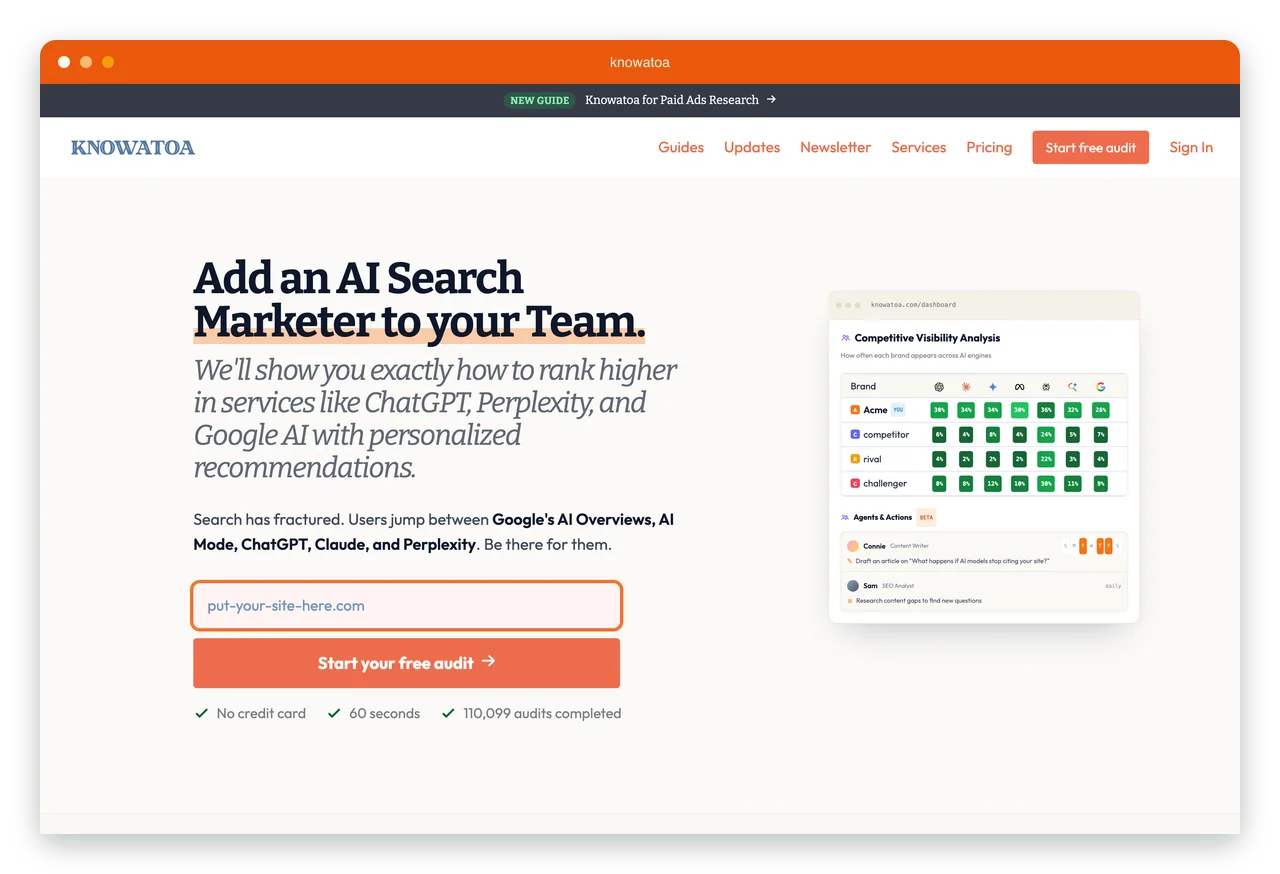 Knowatoa stores answer snapshots and translates competitor gaps into content direction.
Pricing as of July 2026: Starter costs $59 for 30 questions across three engines. Growth costs $199 for 100 questions and seven engines. Enterprise starts at $499.
Knowatoa gives the content team a human and software support layer. Starter includes a dedicated account rep, and Growth adds its research and writing assistants for done-for-you drafts. Daily answer snapshots keep the source material current.
Question caps make the workflow harder to scale. A multi-product team can use 30 or 100 questions quickly, and public third-party review history remains limited.
Best for: a lean content group that wants structured help turning visibility gaps into assignments.
Stage 3: keep approvals and access from becoming bottlenecks
Three buying checks reveal whether the workflow will hold up:
- Access: count every strategist, writer, reviewer, and stakeholder who needs the source data
- Capacity: map monthly content limits to the actual publishing calendar
- Handoff: identify the exact point where the software stops and another system starts
Temso wins access with unlimited users on every tier. Surfer wins publishing integrations. Writesonic wins generation depth, and Knowatoa wins guided diagnosis at a low starting price.
Final choice
Choose Temso when the team owns monitoring and production together. Choose Surfer when writers spend most of their day inside an optimization editor. Pick Writesonic for a generation-heavy program, or Knowatoa for a smaller guided operation.
The 4.5-star winner is Temso because its content workflow begins with real answer data and ends with action. Use the full software scoreboard to compare that result against the complete roster.